What the sciatic nerve is, why it hurts, and what actually helps.
Last Updated: April 1, 2026 · Medically Reviewed by Dr. Marcus Chen, ND
The sciatic nerve is the longest and thickest nerve in your body. It starts in your lower back, runs through your hip and buttock, travels down the back of your leg, and branches into your foot. When this nerve gets irritated, compressed, or inflamed, the pain can be unlike anything else — a sharp, electrical bolt that shoots from your lower back to your toes, sometimes stopping you mid-step. Sciatica is not actually a diagnosis. It is a symptom. Something is irritating the sciatic nerve, and figuring out what that something is determines the right approach.
The most common cause is a herniated or bulging disc in the lumbar spine (L4-L5 or L5-S1 are the usual culprits). The disc material pushes out and presses on the nerve root where it exits the spine. Other causes include spinal stenosis (narrowing of the spinal canal), piriformis syndrome (a muscle in the buttock compresses the nerve), degenerative disc disease, spondylolisthesis (vertebra slips forward), and occasionally tumors or infections. In most cases, the nerve itself is not damaged — it is being squeezed by something nearby. That is good news because it means the pain is potentially reversible if you can reduce the compression.
Classic sciatica follows a pattern: pain starts in the lower back or buttock and radiates down the back of one leg (rarely both). It can feel like an electric shock, a burning sensation, or a deep ache. Sitting often makes it worse because it increases pressure on the lumbar discs. Coughing or sneezing can trigger a sharp bolt. Numbness or tingling in the foot or toes is common. Muscle weakness in the affected leg can develop if the compression is severe or prolonged.
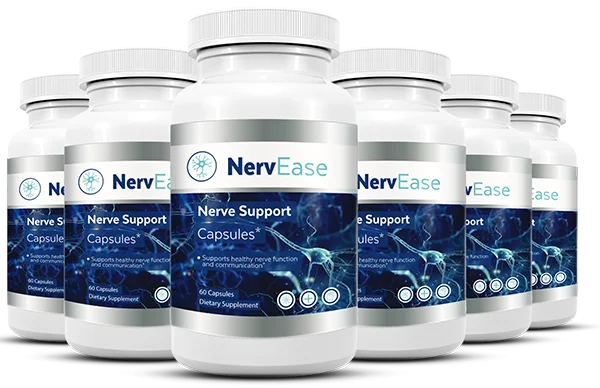
Movement: Counterintuitively, staying active is usually better than bed rest for sciatica. Gentle walking, swimming, and specific stretches (piriformis stretch, knee-to-chest, seated spinal twist) help reduce compression and maintain mobility. Physical therapy: A targeted PT program strengthening core muscles takes pressure off the lumbar spine. Heat and cold: Ice for acute flare-ups (reduces inflammation), heat for chronic stiffness (relaxes muscles). Posture: Sitting with lumbar support reduces disc pressure. Standing desks help. Avoid slouching. Natural supplementation: NervEase addresses sciatic pain through four mechanisms: Marshmallow Root for inflammation, Corydalis for pain signal modulation, Passionflower for nerve calming, and California Poppy for muscle relaxation around the nerve.
Acute sciatica (from a specific event like lifting something heavy) often resolves within 4–8 weeks with conservative management. Chronic sciatica (lasting 3+ months) usually involves ongoing structural issues like disc degeneration or stenosis. In either case, the goal is reducing the inflammation and compression that irritate the nerve while supporting the nerve’s ability to heal and function. Surgery is rarely needed — studies suggest that 80–90% of sciatica cases resolve without surgical intervention. The 60-day guarantee on NervEase covers the typical acute sciatica timeline and provides sufficient evaluation time for chronic cases.
See a doctor immediately if you experience: sudden severe weakness in your leg, loss of bladder or bowel control (this is a medical emergency called cauda equina syndrome), progressive numbness spreading to the groin area, or pain so severe that no position provides relief. These symptoms may indicate serious nerve compression requiring immediate medical intervention. For standard sciatic pain that does not involve these red flags, a combination of movement, posture correction, physical therapy, and botanical nerve support like NervEase represents a comprehensive management approach. The 60-day guarantee makes adding supplemental support risk-free.
Sciatica is one of the most common nerve pain conditions and one of the most frustrating because the pain is often far from its source. The shooting down your leg starts in your lower back. Understanding that disconnect is the key to effective management — you need to address the compression and inflammation at the source (lumbar spine), not just the pain where you feel it (leg). NervEase addresses this with Marshmallow Root for tissue inflammation, Corydalis for pain signal modulation, Passionflower for nerve calming, and California Poppy for muscle relaxation around the nerve. Combined with stretching, posture work, and physical therapy, it represents a comprehensive approach to sciatic nerve management. The 60-day guarantee covers your evaluation. 14,000+ users describe meaningful improvement.
Piriformis stretch: Lie on your back, cross the affected leg over the opposite knee, pull the bottom knee toward your chest. Hold 30 seconds. This directly addresses piriformis syndrome compression. Knee-to-chest: Pull one knee to your chest while keeping the other leg flat. Hold 20–30 seconds each side. Gently decompresses the lumbar spine. Seated spinal twist: Sit with legs extended, cross the affected leg over, twist toward the bent knee. Opens the lumbar region and hip. Cat-cow: On hands and knees, alternately arch and round your back. Figure-four stretch: Similar to piriformis stretch done seated. Good for office workers.
Do these stretches twice daily. Consistency matters more than intensity. Never push into sharp pain. Mild discomfort is normal but shooting pain means you have gone too far. These stretches complement NervEase by physically addressing the compression the supplement addresses biochemically. Movement plus botanical support produces better outcomes than either alone.
Sciatica is one of the most common and most frustrating nerve conditions because the pain is so far from its source. Understanding that the problem is usually in your lower back — not your leg — changes your approach. Address the compression and inflammation at the source. NervEase does this biochemically. Stretching and posture do it physically. Together they represent the most comprehensive non-surgical approach to sciatic nerve management available. The 60-day guarantee covers your combined evaluation. 14,000+ users describe meaningful improvement.
Once sciatica resolves, prevention is the priority. Core strengthening protects the lumbar spine. Regular hip and piriformis stretching prevents muscle compression. Proper lifting technique protects discs. Healthy weight reduces spinal pressure. And daily NervEase provides ongoing anti-inflammatory, antioxidant, and nerve-calming support.
Sciatica recurrence rates are significant — 30–70% experience repeat episodes within a year if returning to the same habits. Prevention is the difference between one episode and a lifetime of recurrence. Core strength, flexibility, proper mechanics, healthy weight, and daily botanical nerve support is the most comprehensive prevention strategy. The long-term NervEase packages support ongoing prevention.
Your sciatic nerve passes through the most mechanically demanding territory in your body. Taking care of it is the difference between mobile, active life and one organized around avoiding the next flare. NervEase supports the biochemical side. Stretching and strength support the physical side. Together they give your sciatic nerve its best chance of staying quiet. Start both today.
If your sciatica has lasted more than three months, it qualifies as chronic. This does not mean permanent. Chronic sciatica means the initial acute cause (disc herniation, muscle compression) has not fully resolved and the nerve continues to be irritated. The management strategy shifts from acute pain relief to long-term nerve support, mobility maintenance, and flare-up prevention.
For chronic sciatica: daily stretching is non-negotiable. Core strengthening 3–4 times per week. Anti-inflammatory nutrition as a lifestyle, not a temporary diet. And daily NervEase for the four biochemical mechanisms that physical approaches cannot address. This combination represents the current best practice for chronic sciatic nerve management outside of surgical intervention.
The 60-day guarantee on NervEase is particularly relevant for chronic sciatica patients because the timeline to meaningful improvement is often 4–6 weeks rather than 2–3. The guarantee covers this extended evaluation period. Many chronic sciatica users describe NervEase as the supplement that finally moved their baseline from constant discomfort to mostly comfortable with occasional flares. That shift may not sound dramatic, but anyone who has lived with chronic sciatica knows it represents a fundamentally different quality of life.
Sciatica does not have to define your daily experience. Between physical therapy, posture correction, regular stretching, anti-inflammatory nutrition, and botanical nerve support through NervEase, you have more tools available than at any point in history. Use all of them. The sciatic nerve responds to comprehensive support better than any single intervention. Start the NervEase layer today with the 60-day guarantee protecting your investment.
Can sciatica cause permanent damage? In most cases, no. The vast majority of sciatica resolves without permanent nerve damage. However, severe or prolonged compression (especially with symptoms like loss of bladder control or progressive leg weakness) requires urgent medical evaluation and potentially surgical intervention. Should I use heat or ice? Ice during acute flare-ups (first 48–72 hours) to reduce inflammation. Heat for chronic stiffness to relax muscles and improve blood flow. Some people alternate both. Is walking good for sciatica? Yes. Gentle walking is one of the best activities for sciatica. It improves blood flow to the nerve, prevents stiffness, and releases natural endorphins. Avoid walking through sharp pain — go at a pace where discomfort is mild and manageable.
How do I sleep with sciatica? Side sleeping with a pillow between the knees reduces lumbar spine pressure. Avoid sleeping on your stomach. Some people find a pillow under the knees while on their back helpful. Will NervEase help my sciatica? NervEase addresses four mechanisms relevant to sciatic pain: inflammation (Marshmallow Root), pain signal modulation (Corydalis), nerve calming (Passionflower), and muscle relaxation (California Poppy). 14,000+ users report reduced sciatic discomfort. The 60-day guarantee covers your evaluation.
Your sciatic nerve deserves comprehensive support. Physical approaches address compression and mechanics. NervEase addresses the biochemistry — inflammation, pain signaling, nerve excitability, and oxidative protection. Together they represent the most complete non-surgical approach to sciatica management available. Start both today. The 60-day guarantee makes adding NervEase to your physical routine completely risk-free.
Sciatica responds to comprehensive management better than any single intervention. Physical therapy builds the structural support your spine needs. Stretching releases the muscles compressing your nerve. Anti-inflammatory nutrition reduces systemic inflammation. And NervEase provides the botanical nerve support covering four biochemical mechanisms that physical approaches cannot reach. The 60-day guarantee makes adding the botanical layer to your sciatica management completely risk-free. 14,000+ users describe meaningful improvement from this comprehensive approach. Your sciatic nerve has been asking for help from multiple directions. Give it all four mechanisms working together. Start tonight.
Your sciatic nerve is the longest nerve in your body and it runs through territory that puts it at constant risk of compression, inflammation, and irritation. Protecting it requires a multi-dimensional approach: physical therapy for structural support, stretching for muscle flexibility, posture correction for spinal alignment, and botanical supplementation for the biochemical mechanisms that physical approaches cannot reach. NervEase provides four of those biochemical mechanisms. The 60-day guarantee makes adding it to your sciatica management risk-free. Start both physical and botanical support today.
Your sciatic nerve responds to comprehensive support. NervEase provides four mechanisms of biochemical support. Physical therapy and stretching provide mechanical support. Together they address every dimension of sciatic pain. Start both today.
Sciatica management is most effective when it addresses every dimension: structural support through PT and core strength, flexibility through daily stretching, behavioral changes through posture and ergonomics, and biochemical support through NervEase targeting inflammation, pain signaling, nerve excitability, and oxidative damage. All four dimensions working together. The 60-day guarantee makes adding the biochemical dimension risk-free. 14,000+ sciatica users describe the difference. Start tonight.